
guides
-
Family EMF Setup Decisions
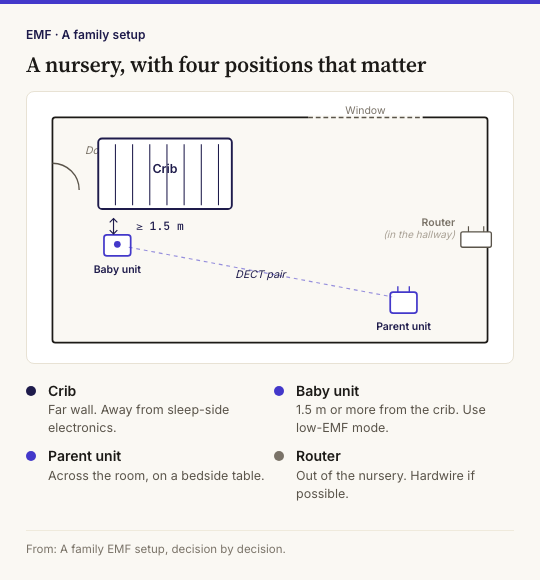
How to set up a nursery and a home network without the alarm or the up-sell. Distance and timing are the levers; the rest is trade-offs to name and decide on. Most parents adding a baby monitor to a nursery are not thinking about electromagnetic fields. They are thinking about whether they will hear their…
-
Water Filtration Technologies Explained
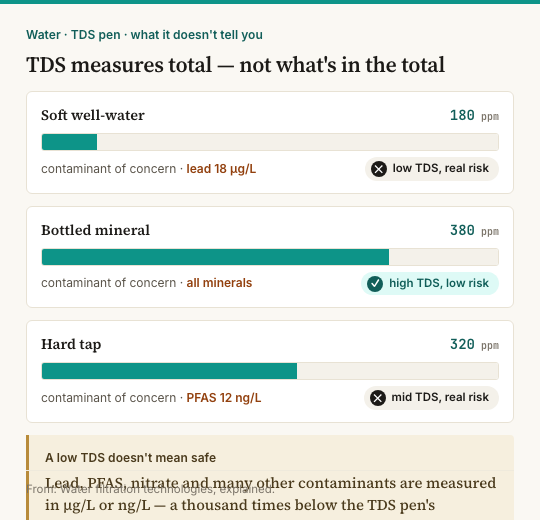
Carbon, carbon block, RO, and ion exchange — what each one is built for, and when you do not need any of them. Key Takeaways Every filtration technology is designed for specific contaminant classes. No single system “removes everything.” The practical sequence is always the same: what is in your water, which technology matches it,…
-
TVOC and Formaldehyde at Home
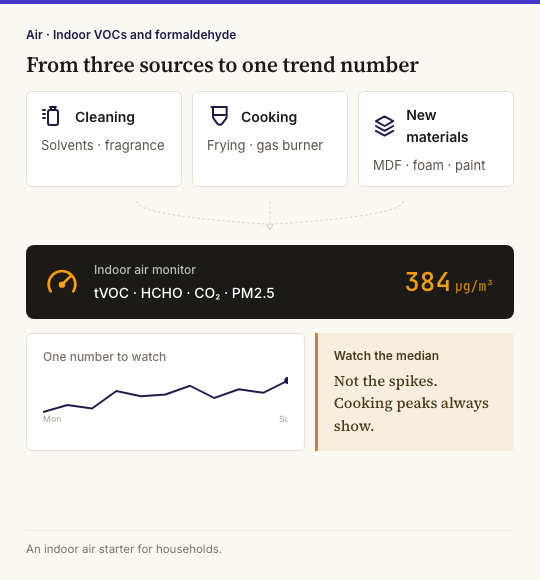
What your air monitor is really telling you, and when to actually act on it. Key Takeaways A home air monitor is a change detector, not a chemistry lab. It tells you “something shifted in the air,” not which specific chemical is present or how much of it there is. Most of the ups and…
-
Structured Water, Vortexing, and Revitalization Devices
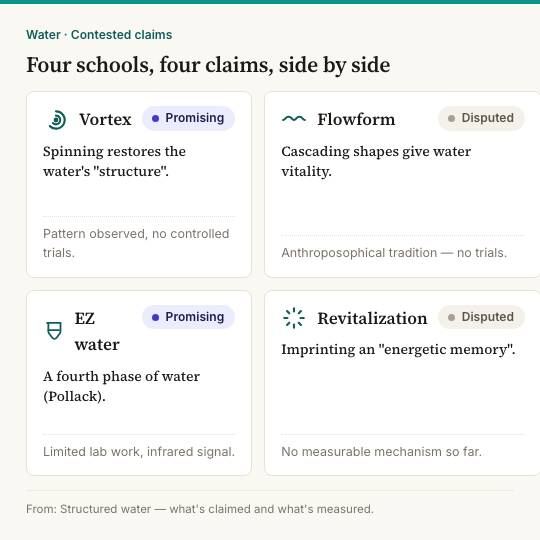
A field guide to four traditions — vortex pitchers, flowforms, EZ-water research, and Grander-style revitalization. What each one believes, what is measurable, and how to decide with more clarity and less noise. Many people have had the same simple experience: water from a spring, a cold stream, or a clay vessel feels different. It tastes…
-
Space Weather Dashboard Basics
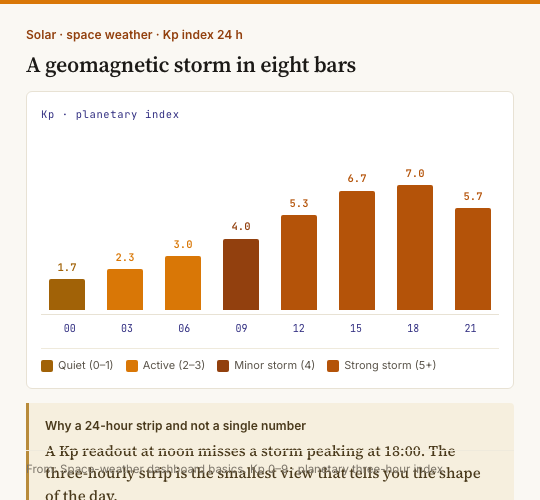
Kp, ap, F10.7, solar wind, and storm levels — what each number is for, and what it is not. Key Takeaways Kp is the main number to know. A 0–9 planetary index that describes geomagnetic disturbance, updated every three hours, built from a network of ground-based observatories. ap is Kp’s maths-friendly cousin. A linearised version…
-
Sleep Better by Design: Feng Shui & Vastu Bedroom Principles
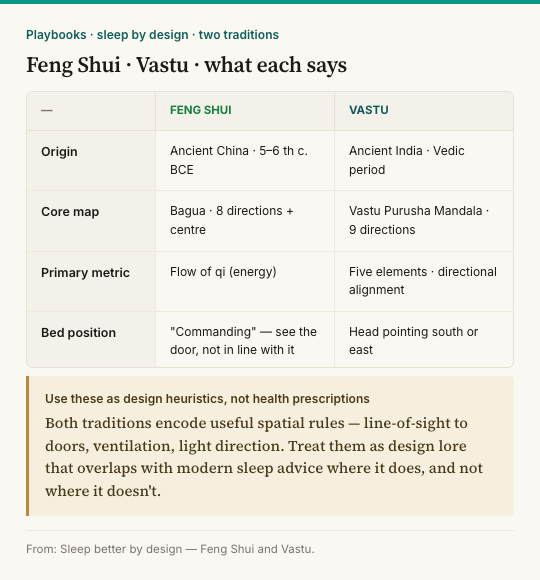
Two ancient design traditions, a few specific bedroom rules, and a quiet way to test them in your own room without committing to the metaphysics first. There is a particular kind of bedroom-design content that goes beyond aesthetics. Instead of just styling tips, it comes with rules — specific ones. The bed can’t face the…
-
Remineralization After Reverse Osmosis

RO removes the minerals along with the contaminants. Remineralization adds some back. Whether that matters for your taste, your plumbing, or your coffee is a chemistry question worth answering honestly. Key Takeaways RO removes most dissolved minerals, which is why the water often tastes flat. Taste is strongly influenced by mineral content, not by purity…
-
Hydrogen-Rich Water and PPM Claims
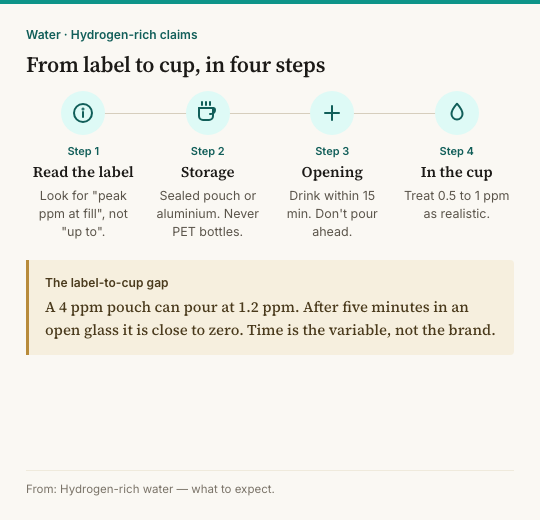
What the numbers mean, what the evidence supports, and where honest uncertainty lives. Key Takeaways Hydrogen-rich water (HRW) is ordinary water with dissolved molecular hydrogen gas added to it. The relevant number is dissolved H₂, measured in mg/L (often written as ppm in a water context). Chemistry sets a natural ceiling: at atmospheric pressure and…
-
Probiotic Cleaners and the Home Microbiome

A real mechanism, a thin home-evidence base, and where these products honestly belong. Key Takeaways Probiotic cleaners use spore-forming Bacillus bacteria that germinate on surfaces and produce enzymes to break down grease and organic residue. The mechanism at work is competitive exclusion: when beneficial bacteria colonise a surface, they slow how quickly other microbes recolonise…
-
Negative Ionizers and Salt Lamps: What They Do, What They Don’t, and Where Ozone Matters
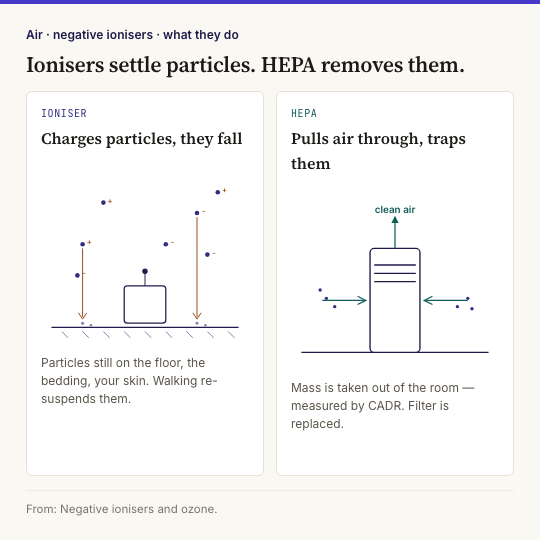
A sceptical review of a wellness-market category. The physics underneath is real; what it scales to in a living room is a much smaller claim than the box suggests. Ionizer air purifiers and Himalayan salt lamps have been fixtures of the wellness market for years. The pitch is consistent: they emit negative ions, the air…