
Water
-
Water Filtration Technologies Explained
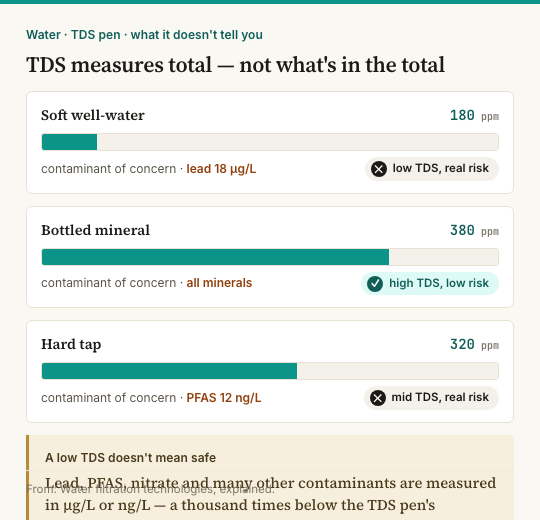
Carbon, carbon block, RO, and ion exchange — what each one is built for, and when you do not need any of them. Key Takeaways Every filtration technology is designed for specific contaminant classes. No single system “removes everything.” The practical sequence is always the same: what is in your water, which technology matches it,…
-
Structured Water, Vortexing, and Revitalization Devices
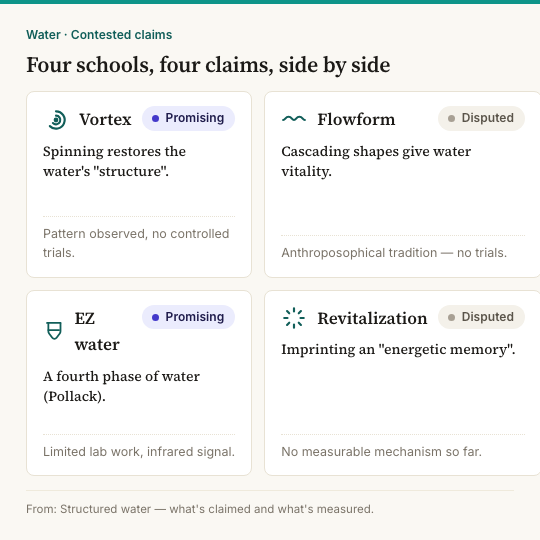
A field guide to four traditions — vortex pitchers, flowforms, EZ-water research, and Grander-style revitalization. What each one believes, what is measurable, and how to decide with more clarity and less noise. Many people have had the same simple experience: water from a spring, a cold stream, or a clay vessel feels different. It tastes…
-
Remineralization After Reverse Osmosis

RO removes the minerals along with the contaminants. Remineralization adds some back. Whether that matters for your taste, your plumbing, or your coffee is a chemistry question worth answering honestly. Key Takeaways RO removes most dissolved minerals, which is why the water often tastes flat. Taste is strongly influenced by mineral content, not by purity…
-
Hydrogen-Rich Water and PPM Claims
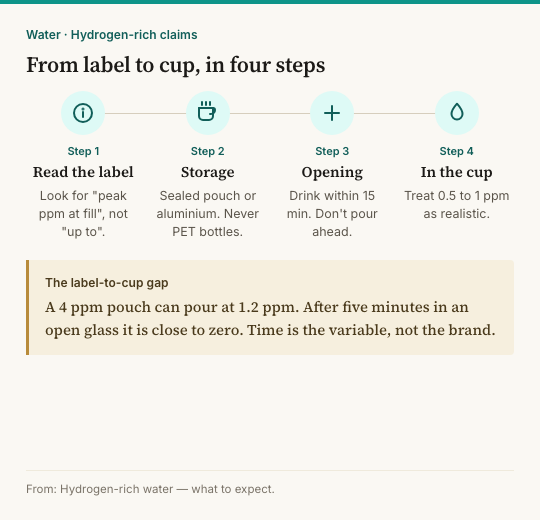
What the numbers mean, what the evidence supports, and where honest uncertainty lives. Key Takeaways Hydrogen-rich water (HRW) is ordinary water with dissolved molecular hydrogen gas added to it. The relevant number is dissolved H₂, measured in mg/L (often written as ppm in a water context). Chemistry sets a natural ceiling: at atmospheric pressure and…
-
PFAS in Tap Water: Filtering, Certification, and Maintenance
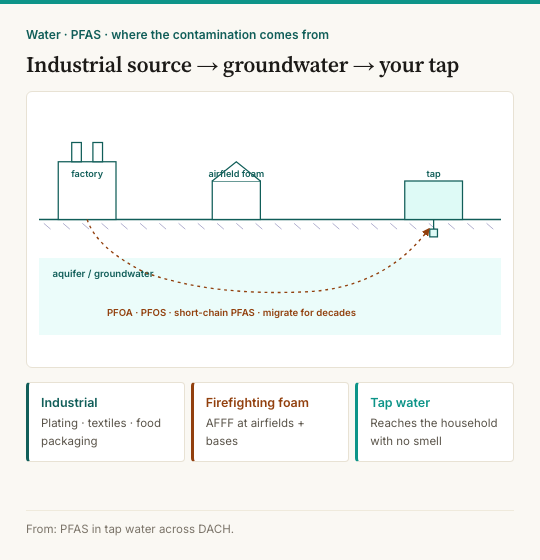
Key Takeaways Per- and polyfluoroalkyl substances (PFAS) are a large family of synthetic chemicals that accumulate in the body over time, and standard water treatment does not remove them. The good news: the same filter technologies that remove PFAS also improve taste, reduce chlorine, and address other water-quality concerns. A good PFAS filter is a…
-
Lead and Copper at the Tap
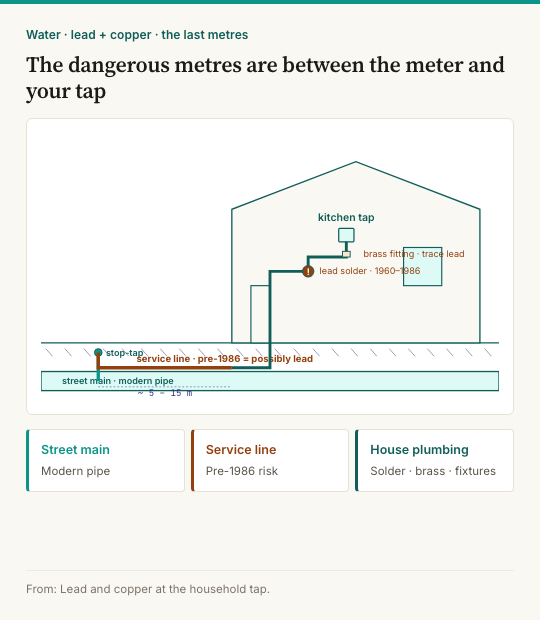
Old pipes, stagnation samples, and certified fixes — a practical guide for DACH homes. Key Takeaways Lead and copper in tap water are invisible, tasteless, and odourless. In buildings with older plumbing, the only way to know what is in your glass is to test. The risk comes from your building’s own pipes and fittings,…