
Solar & Geophysical
-
Heliobiology: Resonance Between Solar Activity and Health
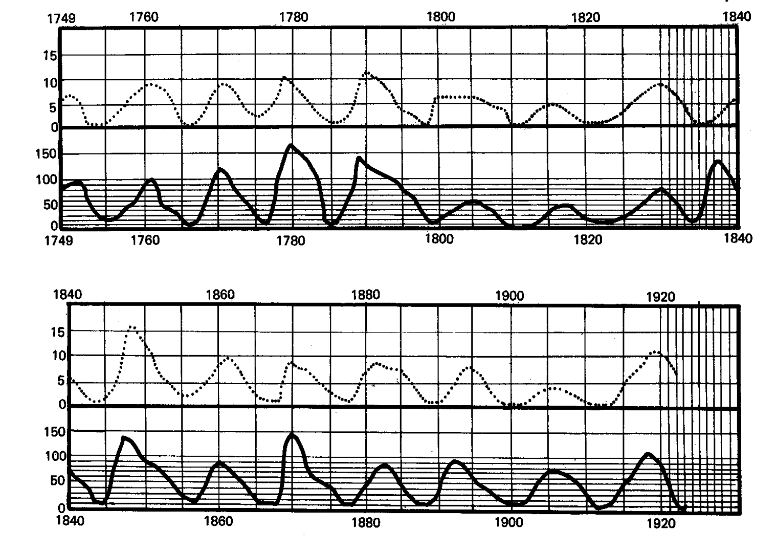
Key Takeaways Heliobiology explores whether changes in solar activity and Earth’s geomagnetic environment correlate with biological rhythms, including signals linked to the brain and cardiovascular system. The central puzzle is magnitude: geomagnetic disturbances are surprisingly small relative to Earth’s background field, which means field strength alone doesn’t explain the reported associations (Palmer, Rycroft, & Cermack,…
-
The Heart’s Hidden Intelligence: Solar Storms, Coherence and Consciousness

Editor’s note: This page presents a conversation between Tobias Pahlen (SolarHealth) and Prof. Abdullah Alabdulgader. The views, clinical observations, and theoretical positions expressed are those of the participants and reflect their research and perspectives. This is not medical advice. Readers with cardiovascular or other health conditions should consult their own healthcare providers. Key Takeaways Prof.…
-
The Solar Cycle’s Impact on Earth

Key Takeaways Multiple solar and geomagnetic parameters change systematically across the 11-year solar cycle — and each can be tracked with real-time or near-real-time data Total Solar Irradiance barely changes across the cycle; shortwave radiation (especially EUV) varies by orders of magnitude and drives most of the solar cycle’s effects on Earth’s atmosphere Schumann resonances…
-
What is Space Weather?

Key Takeaways Space weather refers to the changing conditions in near-Earth space driven by solar activity — primarily solar wind, flares, and coronal mass ejections Earth’s magnetosphere shields the planet from the solar wind, but strong events can compress it, triggering geomagnetic storms Geomagnetic storms typically last 1–5 days and reach around 100 nT in…
-
The Mystery of Solar Cycles: Historical Patterns and Predictions

Key Takeaways The 11-year sunspot cycle is one of the most reliably documented patterns in astrophysics, tracked continuously by international observatories since 1849 Solar activity operates across multiple timescales — from months to millennia — recorded in magnetograms, isotope data from tree rings, and centuries of telescopic observation Some researchers predict a Grand Solar Minimum…
-
The Science Behind Sunspots
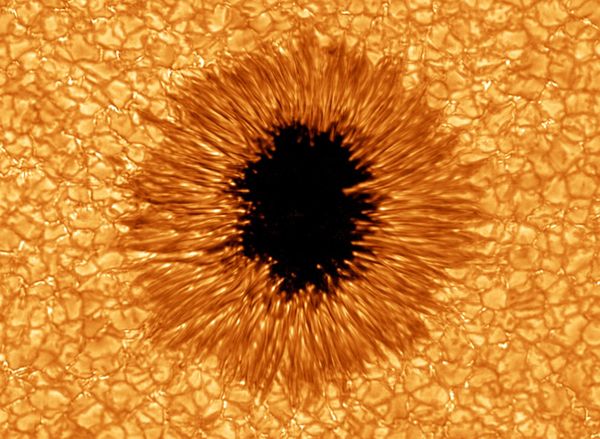
Key Takeaways Sunspots form when strong magnetic fields suppress convection in the Sun’s outer layer, producing cooler, darker regions on the surface The interaction between solar plasma and the magnetic field — magneto-convection — drives both sunspot formation and solar flare activity Sunspots can span up to 160,000 km in diameter and persist anywhere from…