
Historically, in 1926, Alexander Tchijevsky’s work first established the link between solar activity and human health. He also highlighted its impact on societal mood (Tchijevsky, 1971). Tchijevsky used a method known as historiometry to quantitatively analyze historical events. He assigned indices to various aspects like violence. His comparisons of these social indices with periodic sunspot activity revealed a compelling pattern. Revolutions, mass killings, and periods of conflict are significantly more likely to occur during Solar Maxima. In contrast, Solar Minima foster cultural flourishing and social stability. Subsequent studies have robustly validated this hypothesis. These studies used diverse historical data and statistical methods. They demonstrate that these phenomena do exist with very high probability (Ertel, 1996; Putilov, 1992).
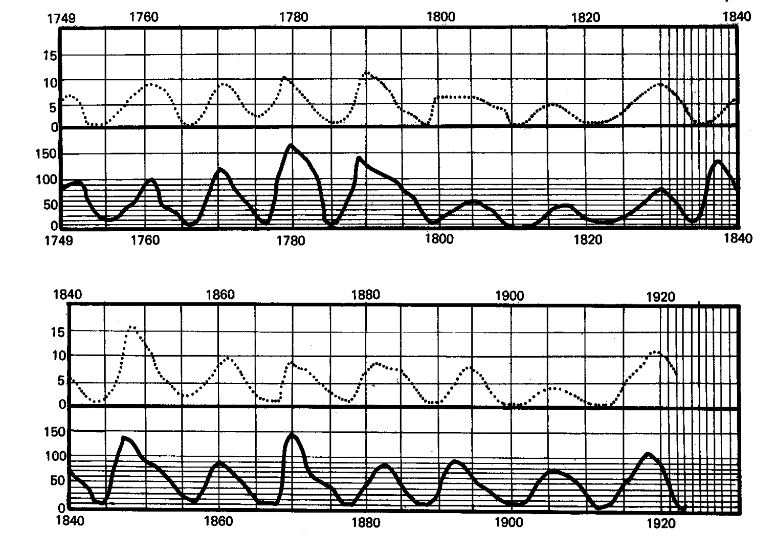
Correlation of sunspot number (lower bold graph) and violence index of historic events (upper dashed graph). Tchijevsky, 1926
Tchijevsky impressively conducted his research for decades using limited astronomical data. He relied on simple telescopic sunspot observations, which were the only technical resources available at the time. Since the second half of the 20th century, we have gained extensive knowledge about our solar system. A lot of data has emerged regarding the heliosphere. Modern heliobiological studies employed various statistical methods to rigorously analyze relationships between solar and medical factors. Interestingly, most of the findings have been linked to the heart / cardiovascular system and the brain. Several scientific reviews collected a robust foundation of evidence for heliobiological phenomena (Palmer, Rycroft, & Cermack, 2006; Zenchenko & Breus, 2021). They also acknowledge there is still a missing understanding of the precise mechanisms by which solar interactions affect the body.
The power of resonance
Understanding how geomagnetic disturbances affect human health presents a key challenge. Their field strengths are much lower than those from technical devices like mobile phones or the power grid. Space weather related geomagnetic disturbances can reach a field strength of 300 nT during strong geomagnetic storms, but this is only 1% of the normal field (Palmer et al., 2006). Since mobile phones emit much stronger electromagnetic fields, we could expect them to have a much greater impact on health. However, this devastating effect doesn’t seem to occur – at least not in the time frame since we are using these technologies. But besides field strength there are also other differences between the natural and artificial fields: Their frequencies could play a more important role than the intensity. Additionally, humankind may have developed ways to adapt to different magnetic conditions. Humans have already experienced significant changes in Earth’s history of geomagnetism, including geomagnetic reversals.
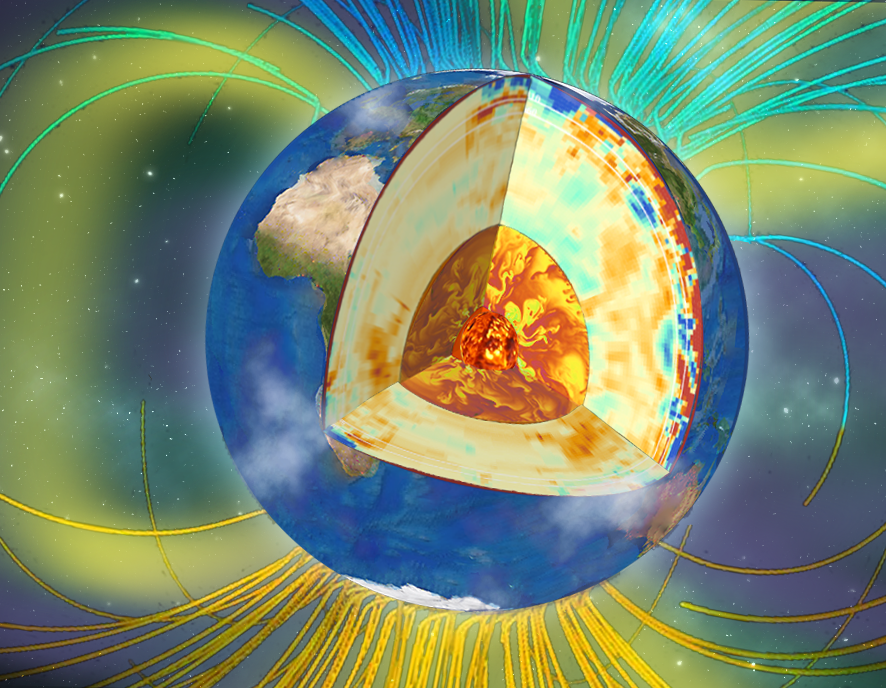
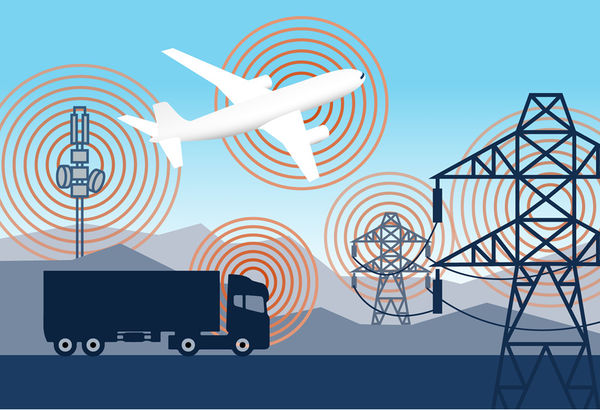
Geomagnetic and artificial man-made fields are quite different – both in field strengh as well their frequency patterns.
The comparably weak strength of geomagnetic disturbances should be taken into account when looking at how they affect life. This makes it hard to explain direct interactions at the cellular or molecular level. Many researchers suggest that certain body systems may resonate with natural magnetic frequencies. This resonance could explain the observed effects in heliobiology. But what does resonance mean? It is basically an effortless energy transfer, which only happens when two systems get in tune with each other. This principle can be found in various examples of life. It exists between two people in love. You can also see it in the vibration of a guitar string exciting its wooden body to sound. It also occurs in medicine during an MRI scan of your body (magnetic resonance imaging).
Our bodies also work in rhythms: the heartbeat, the breath, and brain waves follow repeating patterns. These rhythms are closely linked to how we feel and operate. One of these is the circadian rhythm—our internal clock that helps regulate sleep, energy, mood, and hormone levels. This rhythm is mainly influenced by natural signals like light and darkness—day and night. Researchers are suggesting that also other natural forces, like solar activity and space weather, might play a role. The idea is that just as our bodies respond to sunlight, they might also react subtly to other changes in our geospace environment (Sahai, Sahai, 2013). Specifically, research pointed out these very low frequencies from resonances in Earth’s magnetosphere:
Schumann Resonancs are constantly excited in the Earth–ionosphere belt by lightning around the world
- Ultra-low frequencies (ULF) have a frequency range of 10−3 to 1 Hz. They are produced by solar wind particles interacting with the outer ionosphere. There are two notable geomagnetic pulsations: Pc1 (period 0.2–5 s) and Pc5 (period 150–600 s). Pc5 appear during the start of a geomagnetic storm. Pc1 pulsations are similar to human heart rates. They were found to possibly impact the cardiovascular system. These pulsations may contribute to heart attacks (MI). They occur during geomagnetic storm recovery after about 3–5 days. This timing could explain the delay in biological responses to geomagnetic storms.
- Extremely low frequencies (ELF) are part of Schumann resonance signals in the inner Earth–ionosphere resonator. They range from 5 to 60 Hz. The Earth-ionospheric layer acts like an electrical amplifier, excited by lightning worldwide. Same like in a musical instrument, its “sound” depends on the Earth–ionosphere shape, which is influenced by solar activity. More information about Schumann resonances’ physics background can be found in my other post. Schumann resonances are similar to brain waves, and many studies connect them to the effects of solar activity on Earth.
Schumann Resonances and the brain
As a potential biophysical mechanism, researchers asserted that solar activity’s human health effects can be explained by Schumann resonance signals. They convincingly demonstrated that the human brain can resonantly absorb these signals due to the shared frequency range with brain waves (Cherry, 2002). Researchers also presented a clear representation of Schumann resonances within the spectral densities of human EEG (Persinger, 2014; Saroka & Persinger, 2014). They also discovered that these power densities showed a time-related connection. This syncing between Schumann resonances and the different frequency bands of the brain showed, that our body uses these frequencies for some reason.

Frequency spectrum of the brain, overlaid in blue lines are the first three Schumann Resonance frequencies (Saroka & Persinger, 2014)
The exact ways how environmental frequencies sync with our brain frequencies are still unclear. (Sahai, Sahai, 2013) described a neuronal pathway connecting the retina in our eyes and the pineal gland in the brain centre. They showed how visible light affects hormone release. They suggested that also other wavelengths affect the release of these hormones like melatonin. The pineal gland may act as a magneto-sensitive receiver itself. This is because they found piezoelectric crystals in this gland that can sense magnetic fields. The hormones from the pineal gland play a vital role in controlling biological rhythms and functions in the body.
Besides these effects, variations in the visible light at the Earth’s surface also deserve consideration. For instance, UV radiation at Earth’s surface is worth considering. Ozone loss from increased cosmic rays in solar minima can increase UV levels and thereby weaken natural defenses, which poses a health risk (Lu, 2009). According to Herndon, Hoisington, & Whiteside (2018), UVB and UVC radiation can seriously harm the biosphere. This is especially true during periods of low solar activity.
As mentioned earlier, direct cellular interaction via electrophysiological mechanisms appears improbable. The reason is the low field strengths of natural geomagnetic disturbances. However, an alternative and intellectually compelling pathway has emerged in recent literature (Nevoit et al., 2025). This involves the concept of a systemic resonance phenomenon within the human body, intimately connected to the theory of biophotons. These biophotons have been the subject of research for several decades. They are hypothesized to originate from coherent standing wave fields, often referred to as solitons. Their precise physiological role remains elusive. Yet, they are increasingly regarded as fundamental to metabolic regulation. They also play a role in intercellular communication and even supersede traditional biochemical paradigms.
Notably, it has been proposed that this biophoton field may enter into resonance with the Schumann resonances. Such a coupling could facilitate a subtle synchronization between the human organism and its geophysical environment. Remarkably, this occurs without necessitating a discrete sensory organ. In this context, it is particularly significant that diverse physiological systems have demonstrated resonance with solar variability. This includes the nervous system, cardiovascular system, urinary tract, and even electromagnetic parameters of the skin (Nevoit et al., 2025). This further underscores the plausibility of a holistic resonance mechanism.
 SOLARHEALTH
Leave a comment