
Space Physics Basics
-
The Solar Cycle’s Impact on Earth
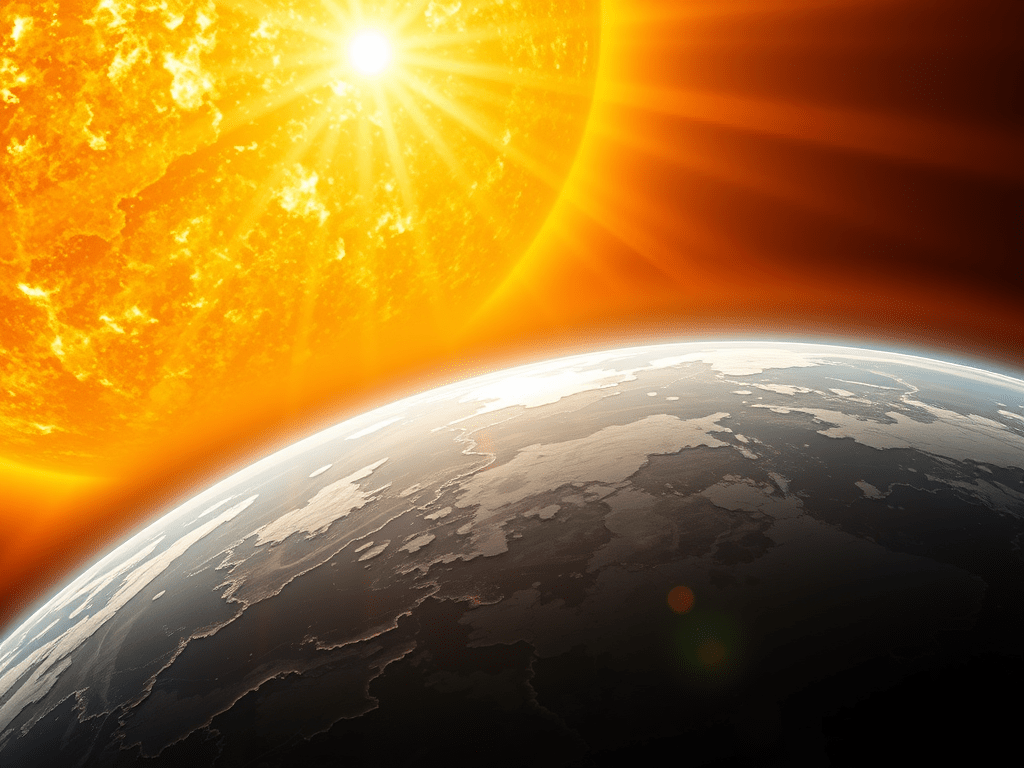
Several important features of the Sun and its effects on Earth vary during the Solar Cycle. These are observed from the ground or satellites near Earth. They help us understand the Sun-Earth connection. They are essential for understanding how solar activity relates to health. It is crucial to acknowledge their importance and their implications for…
-
What is Space Weather?

The Sun’s magnetic field reaches thousands of kilometers beyond its surface and speeds up particles way beyond its atmosphere. These energetic particles can leave the Sun and travel to other planets in the solar system carried by the solar wind. Furthermore, the solar magnetic field holds a lot of magnetic energy. Sometimes, rapid changes lead…
-
The Mystery of Solar Cycles: Historical Patterns and Predictions
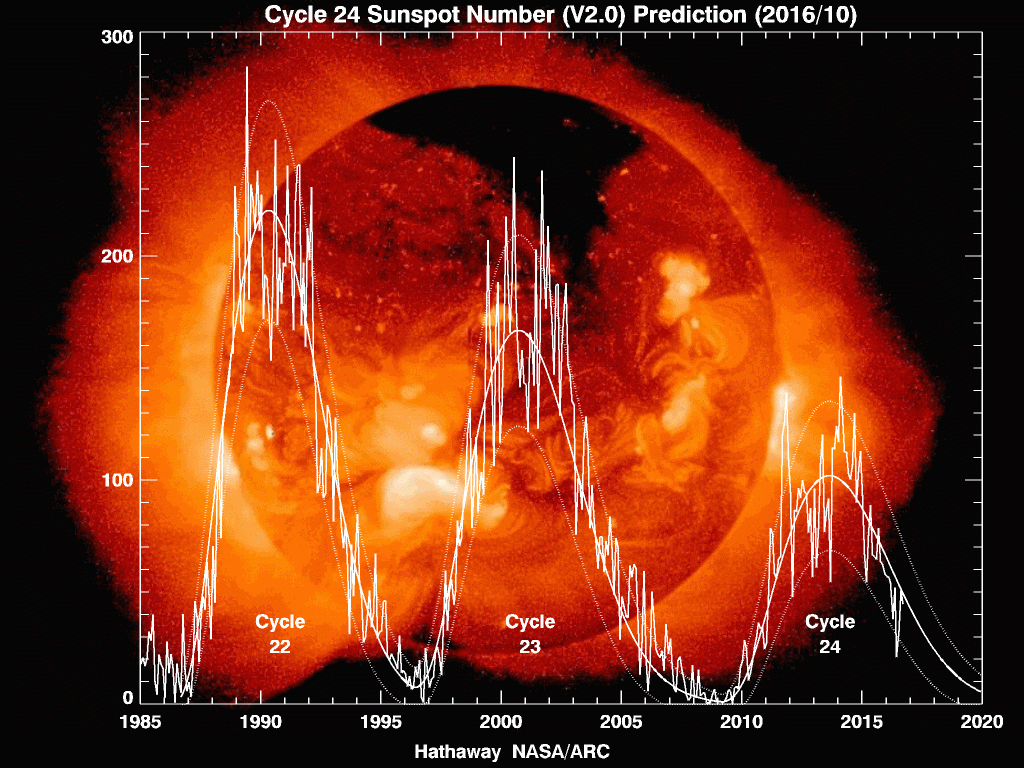
In 1844, Schwabe found that sunspots appear in cycles of about 11 years, a discovery confirmed by other astronomers. This led to the creation of the International Sunspot Number (R), which measures individual sunspots and groups. Since 1849, R is calculated as an average from various observatories around the world. Besides optical observations, a magnetogram…
-
The Science Behind Sunspots
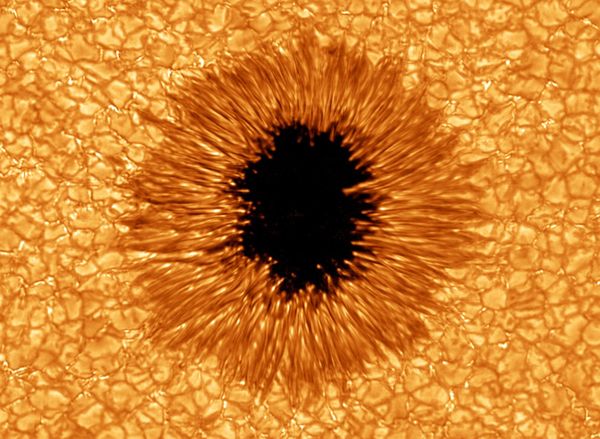
Astrophysically, our Sun is considered a cool star because it has a low surface temperature. This affects how heat moves from the inner core to the surface. In the outer 30% of the Sun, heat from nuclear reactions is mainly spread through convection instead of radiation. The mixing of solar plasma and the solar magnetic…
 SOLARHEALTH